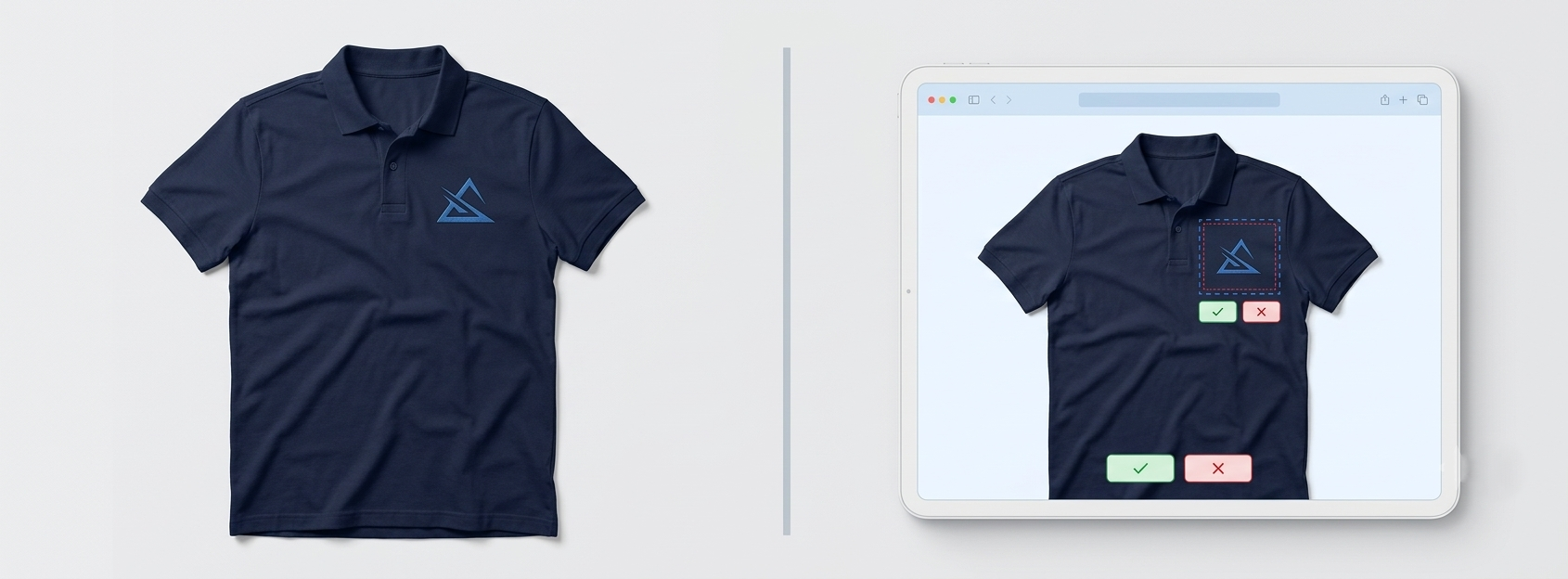
Short answer: A virtual proof is a digital preview, built from the actual production artwork, that shows exactly how a design will look once it is printed or embroidered on the finished product. Sending one before production starts gives the client a chance to catch placement, size, or color problems while they're still free to fix. Skipping it moves that same check to after the run is printed, when the fix is a reprint instead of a revised file.
A client says yes to a design on a call, the job goes to production, and three days later the boxes come back wrong. The logo sat lower than they pictured, or the shirt color read differently than it did on their screen. None of that is a production mistake. It's an approval mistake, and it's exactly what a virtual proof is built to prevent.
What Is a Virtual Proof?
A virtual proof is a digital preview that places the actual artwork onto a photo-realistic version of the product the client is ordering, at the scale and position it will actually print or stitch. It's not a sketch and it's not the client's logo pasted roughly onto a stock photo. It's built from the same files that go to the press or the digitizing software, so what the client signs off on is what the machine will run.
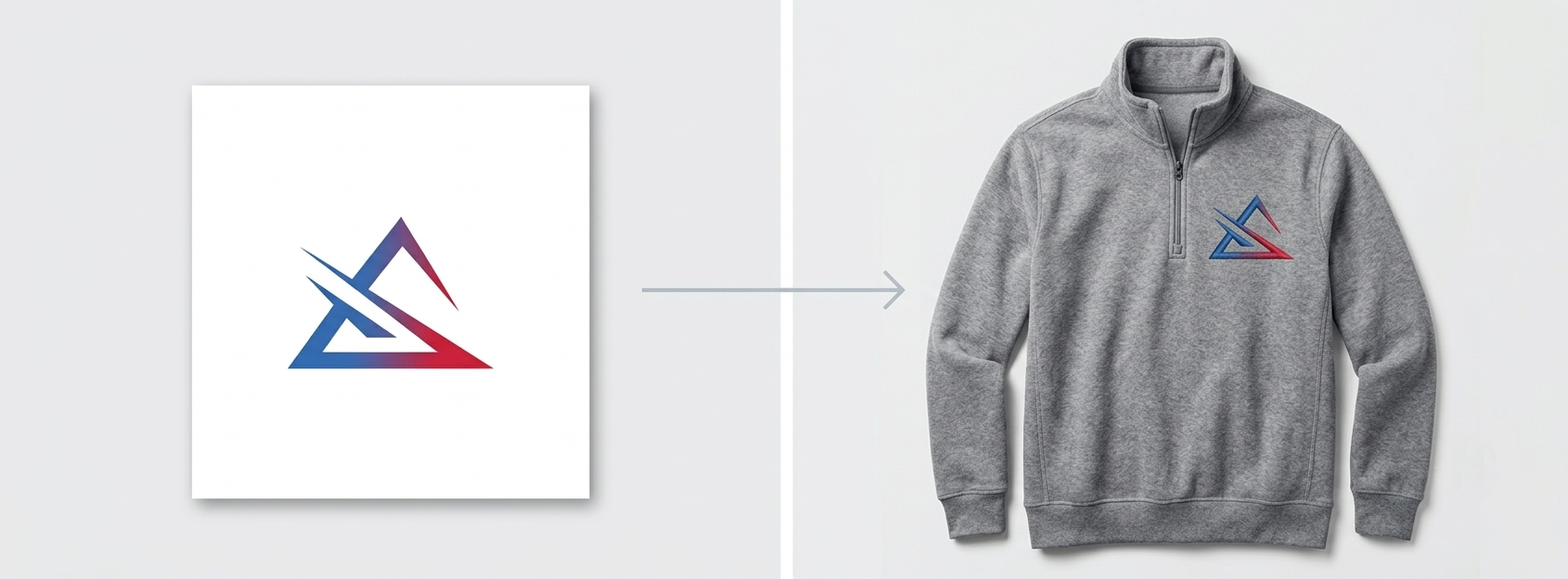
Mockups show up at a few points in the order process, and the terms get used loosely:
- Sales mockups help a rep pitch an idea before an order is even placed
- Virtual proofs are the client-facing preview used for formal sign-off right before production
- Production art references are internal files the press or embroidery team works from
This post is mainly about the second one, the proof that locks in client approval, because that's the step that prevents the most expensive mistakes.
Why Skipping a Proof Costs More Than Making One
Placement looks different on a product than in a client's head. A client can picture "logo on the left chest" and still be surprised when they see it sized and positioned exactly as specified. A proof removes the guessing.
Color shifts between screens, inks, and threads. A navy logo on one monitor doesn't always match the embroidery thread or the ink that prints it. A proof built with real color references catches this before a single stitch is sewn.
Verbal approval isn't a record. "Looks good, go ahead" over email or a call leaves nothing to point back to if the finished order doesn't match what the client had in mind. A saved, dated proof is the agreement both sides can refer to.
Reprints cost far more than a revision. Catching a placement issue on a proof means adjusting a file. Catching it after production means wasted blanks, wasted thread or ink, a rerun, and a client who is now behind on their own deadline.
Types of Virtual Proofs
Not every order needs the same level of realism. Here's how the common types compare.
| Flat mockup | Photo-realistic mockup | 3D render | |
|---|---|---|---|
| What it shows | Artwork placed on a flat line drawing of the product | Artwork placed on a real product photo, with texture and shading | Artwork on a 3D model, viewable from multiple angles |
| Turnaround | Fastest | Standard, 12 to 24 hours | Longest, usually reserved for complex or large orders |
| Best for | Quick internal checks, simple reorders | Most client-facing approvals | Large programs, trade show samples, products with unusual shapes |
| Limitation | Doesn't show fabric texture or real color | Single angle per image | Takes longer to build than a flat or photo mockup |
For most promotional product and apparel orders, a photo-realistic mockup is the right level of detail. It's accurate enough to catch placement and color problems without the extra time a full 3D render takes to build.
What a Good Virtual Proof Includes
- True-to-scale placement. The logo or design sits at the actual size and position it will print or stitch at, not a size chosen to look good in the image
- Accurate product color. The garment or product color in the proof matches the color the client actually ordered
- Accurate artwork color. Ink or thread colors are checked against Pantone or thread references, not just eyeballed against the client's logo file
- The correct product. The proof uses the exact style the client ordered, not a similar-looking stand-in
- Clear labeling. Placement, size, and any color codes are noted on or alongside the proof, so there's no ambiguity about what was approved
How Outsourcing Speeds Up Approval
Building accurate proofs in-house takes a trained eye and time most sales or account teams don't have between calls. Outsourcing virtual proofs to a dedicated production art team means:
- Turnaround in hours, not days, most proofs completed within 12 to 24 hours, with rush options in as little as 4
- Consistent quality regardless of order volume or how busy the season is
- One proof format every client sees, so approvals move faster because they know what they're looking at
What to Send for a Virtual Proof
For the fastest, most accurate turnaround, provide:
- Vector or high-resolution artwork (see our guide to vector conversion)
- The exact product or garment style and color
- Intended placement and size
- Pantone or thread color references, if color matching matters
- Any special technique involved, such as embroidery, applique, or chenille (see our applique vs. chenille guide), since that changes how the proof should be rendered
FAQ: Virtual Proofs and Product Mockups
What is a virtual proof?
A virtual proof is a digital preview that shows exactly how artwork will look once it is printed, embroidered, or applied to a finished product. It is built from the actual production files, not a rough sketch, so what the client approves is what gets made.
What is the difference between a mockup and a virtual proof?
The terms are often used interchangeably, but a mockup is usually the broader term for any visual showing artwork on a product, while a virtual proof specifically refers to a client-facing preview meant for sign-off before production starts.
Do virtual proofs actually reduce reprints?
Yes. Most costly reprints trace back to a placement, size, or color issue the client never actually saw before production. A clear, to-scale proof catches those problems at the approval stage, when fixing them costs nothing more than a revised file.
How long does a virtual proof take to turn around?
Standard turnaround is 12 to 24 hours when outsourced, with rush service available in as little as 4 hours.
Vertex Creative Solutions builds fast, accurate virtual proofs for apparel decorators, promotional product companies, and print shops across the USA, UK, Canada, and Australia. Typical turnaround is 12 to 24 hours, with rush options in as little as 4.
Explore Mockups & Virtual Proofs arrow_forward