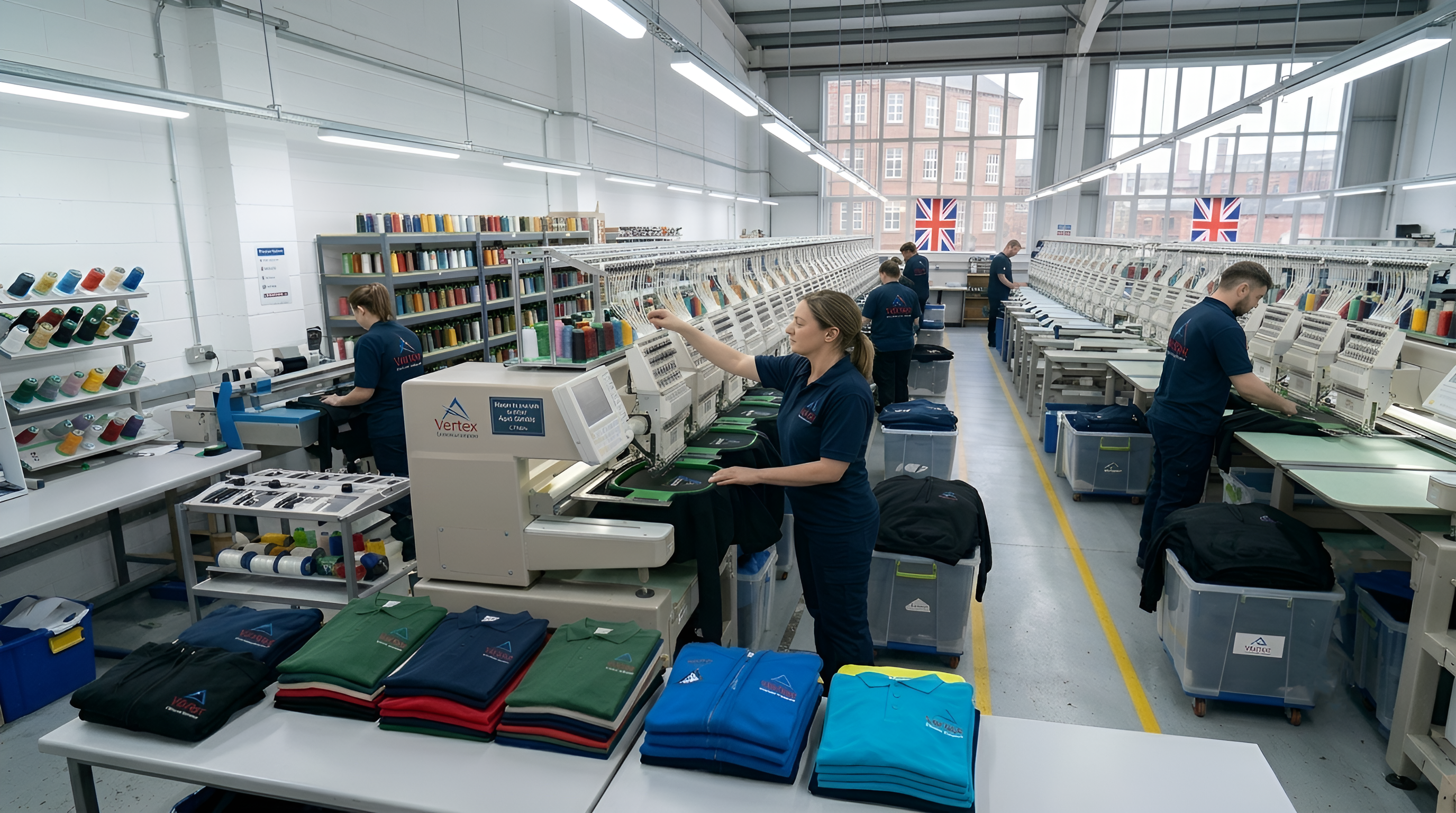
Short answer: Pick a digitizing partner on five things: how fast files come back, whether they supply the format your machine reads, how revisions are handled, how clearly they price, and how well their files sew on your actual garments. The only reliable way to judge the last one is a small trial. Send two or three real designs, including a tricky one, and test sew them before committing to regular work.
Most UK decorators hit the same wall. A run of corporate polos and a batch of club caps arrive in the same week, the in-house digitizer is already booked, and a rush job lands on top. Handing digitizing to an outside partner solves that, but only if the files come back sewing clean. Here is how to pick one without learning the hard way.
Why Do UK Decorators Outsource Embroidery Digitizing?
Digitizing is a specialist skill, and demand for it swings. Workwear contracts, school uniform seasons, club kit, and hospitality orders all arrive in waves. Keeping a skilled digitizer busy through the quiet weeks is hard to justify, so many shops send overflow, or all of it, to a dedicated team. The broader reasoning is covered in Why Promotional Product Companies Outsource Their Production Art.
What Should You Check in a Digitizing Partner?
Five areas decide most of the outcome. Put these questions to any partner you are considering for embroidery digitizing in the UK or anywhere else.
| What to check | Why it matters | Question to ask |
|---|---|---|
| Turnaround | Late files hold up whole orders | What is standard turnaround, and what does a rush cost in time? |
| File formats | The wrong format will not load on your machine | Which formats do you supply, and can you match my machine? |
| Revisions | Few files sew perfectly the first time | Are revisions included, and how fast are they? |
| Pricing | Unclear pricing causes disputes | Is it priced per design, by stitch count, or by size? |
| Sew quality | Clean files save machine time and thread | Can I trial a few designs before committing? |
Experience with your garment mix matters too. Digitizing for caps, performance fabrics, and heavy workwear each calls for different settings. A partner who has done them before saves you several rounds of testing. For example, Hat Digitizing Basics explains why caps need their own files.
Does Working With an Overseas Partner Cause Problems?
It can, and it can also help. Digitizing is delivered as a file, so shipping is not the issue. The things to watch are communication and the time difference. India is roughly four and a half to five and a half hours ahead of the UK, depending on the clocks. A design sent at the end of your day can be worked on overnight, which fits neatly with a 12 to 24 hour standard turnaround.
Ask how queries and revisions are handled across time zones, and which currency the invoice is in, so there are no surprises when it arrives.
What Should a Digitized File Come With?
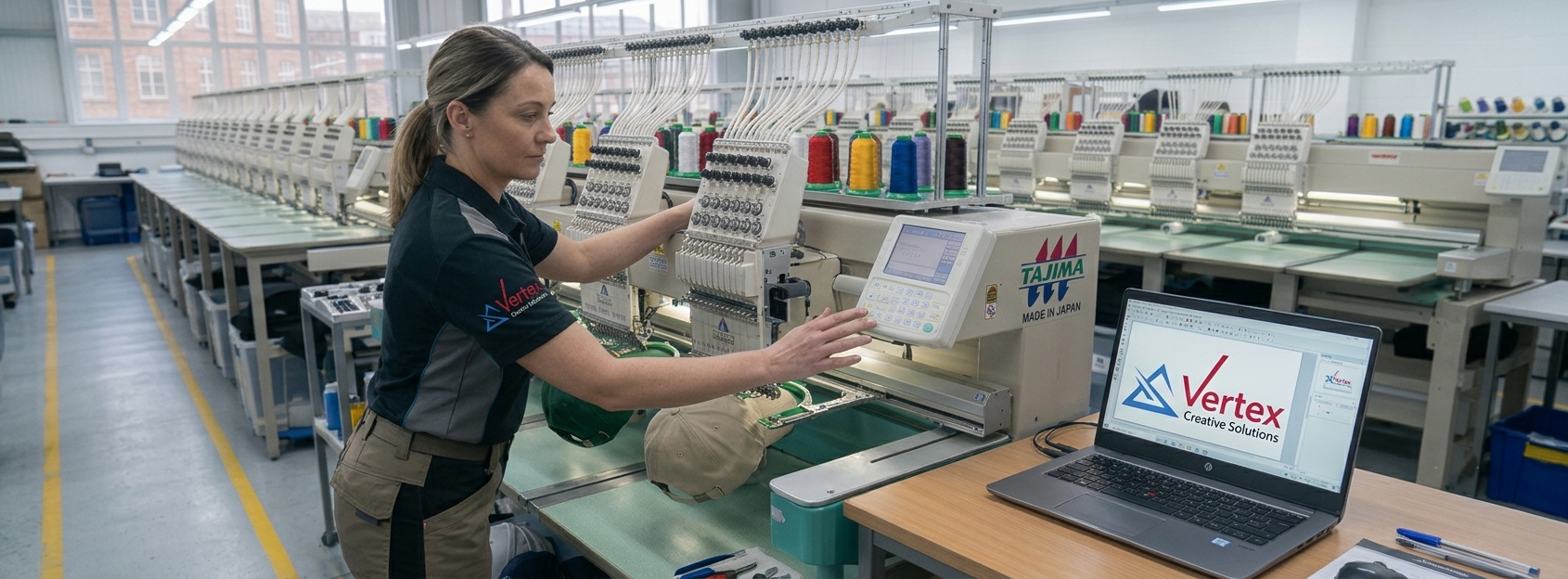
- The machine file in your format, such as DST, PES, EXP, or TAP
- A preview image or PDF showing the design at the finished size
- The colour sequence, because formats like DST store colour change stops, not the thread colours themselves
- The stitch count and dimensions, so you can check size and cost
- An editable file, if you want to adjust the design yourself later
How Do You Test a New Digitizing Partner?
Run a small trial before moving regular work. A few steps keep it honest:
- Send two or three real designs, including one that is tricky, such as small text or a cap
- Sew them on the actual garments you use, not scrap fabric
- Check for puckering, gaps between outlines and fills, and unnecessary trims or jumps
- Request one small revision and time how long it takes
- Compare the turnaround you were quoted with what you got
Placement shapes the file too, and Left Chest vs. Full Back Digitizing is worth reading before you brief a trial design.
What Are the Red Flags?
No preview. If a partner cannot show you what the file will look like before you sew, you are testing on your own thread.
Auto-digitized files. Files that look dense, jumpy, or unusually heavy often come from software auto-digitizing, not a person.
Vague pricing. If you cannot tell what a design will cost before you send it, expect arguments later.
No revision policy. You will need one eventually. Find out the terms before the first file.
One format only. A partner who cannot supply your machine's format is creating extra work for you.
Clean source artwork helps any partner, so Vector Conversion 101 covers what to send.
FAQ: Choosing a Digitizing Partner
What file formats do UK embroidery machines use?
It depends on the machine. DST is the most widely accepted format across brands, while Brother machines commonly use PES, Melco uses EXP, and Happy uses TAP. Check your machine's manual or ask the manufacturer, then tell your digitizing partner exactly which format you need.
Is it safe to outsource embroidery digitizing overseas?
Yes, if you test first. Digitizing is delivered as a digital file, so the risk is quality and responsiveness, not shipping. Send a small trial batch, test sew on real garments, and see how the partner handles a revision request before moving regular work across.
What should I ask a digitizing partner before my first order?
Ask which formats they supply, what turnaround to expect, whether revisions are included, how pricing is calculated, and what comes with the file besides the stitch data. A clear, specific answer to each is a good sign. Vague answers are worth noting.
How fast can outsourced embroidery digitizing be turned around for UK customers?
Typical turnaround is 12 to 24 hours, with rush options available in as little as 4 hours. Because of the time difference, a design sent at the end of the UK working day can be worked on while you are offline.
Vertex Creative Solutions provides embroidery digitizing from Chennai, India, for apparel decorators, promotional product companies, and print shops across the UK, USA, Canada, and Australia. Typical turnaround is 12 to 24 hours, with rush options in as little as 4. Send two or three real designs and the format your machine reads, and we will take it from there.
Explore Embroidery Digitizing arrow_forward